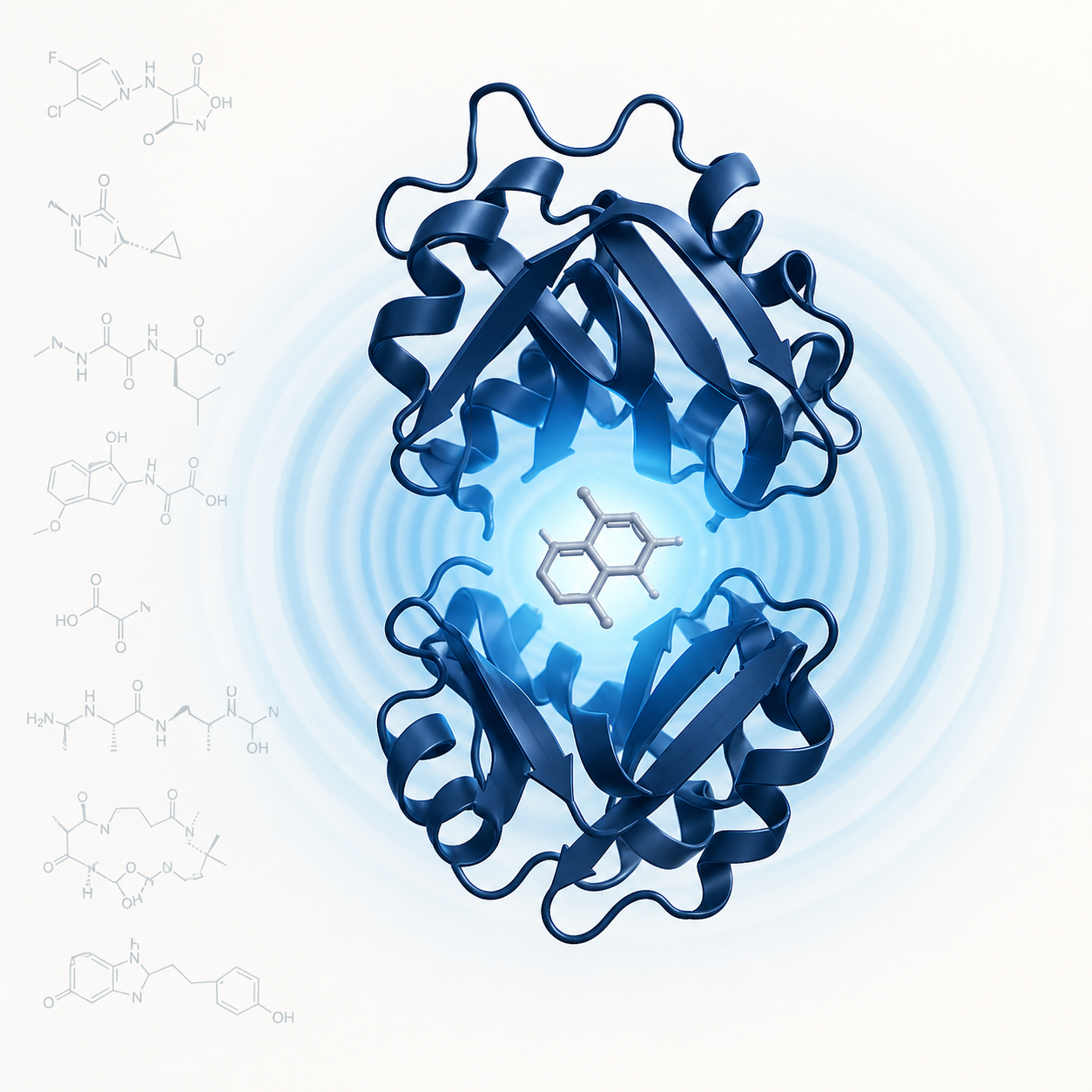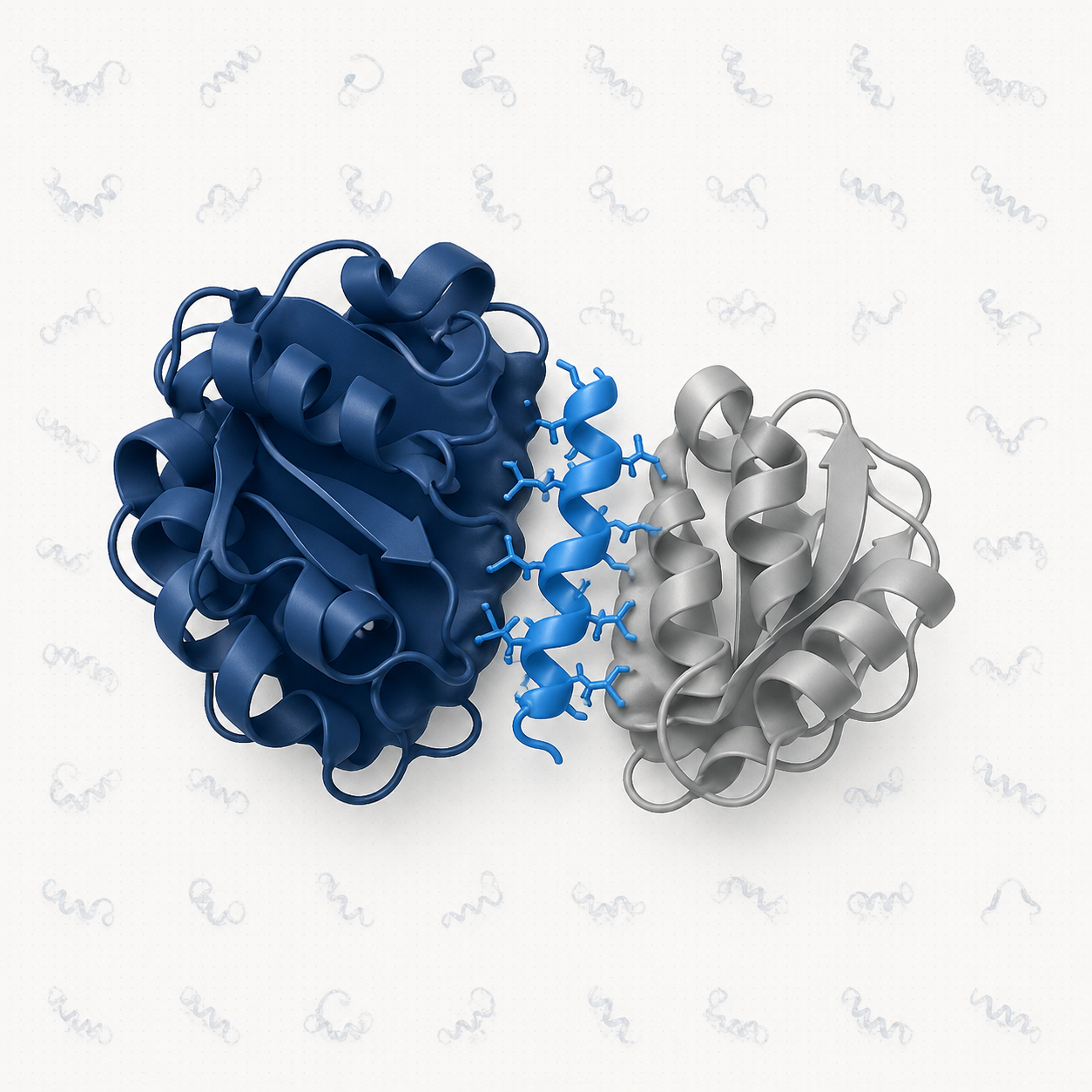
A peptide binder wedged into a protein-protein interaction interface between two protein domains
Theme 01 · Therapeutic intervention

Targeting Protein–Protein Interactions

Protein–protein interactions (PPIs) underlie most cellular processes and represent a vast, largely untapped target space for therapeutic intervention. Yet, traditional drug discovery often misses PPIs because their interfaces are flat and lack well-defined pockets.

Our approach. We develop potent peptide and protein binders against disease-relevant PPIs through library screening, then validate them in cell-based assays to identify modulators of pathogenic interactions. The lead candidates serve as starting points for therapeutic peptides, biologics, and chemical biology probes.
library screening PPI inhibitors therapeutic peptides cell-based assays protein engineering
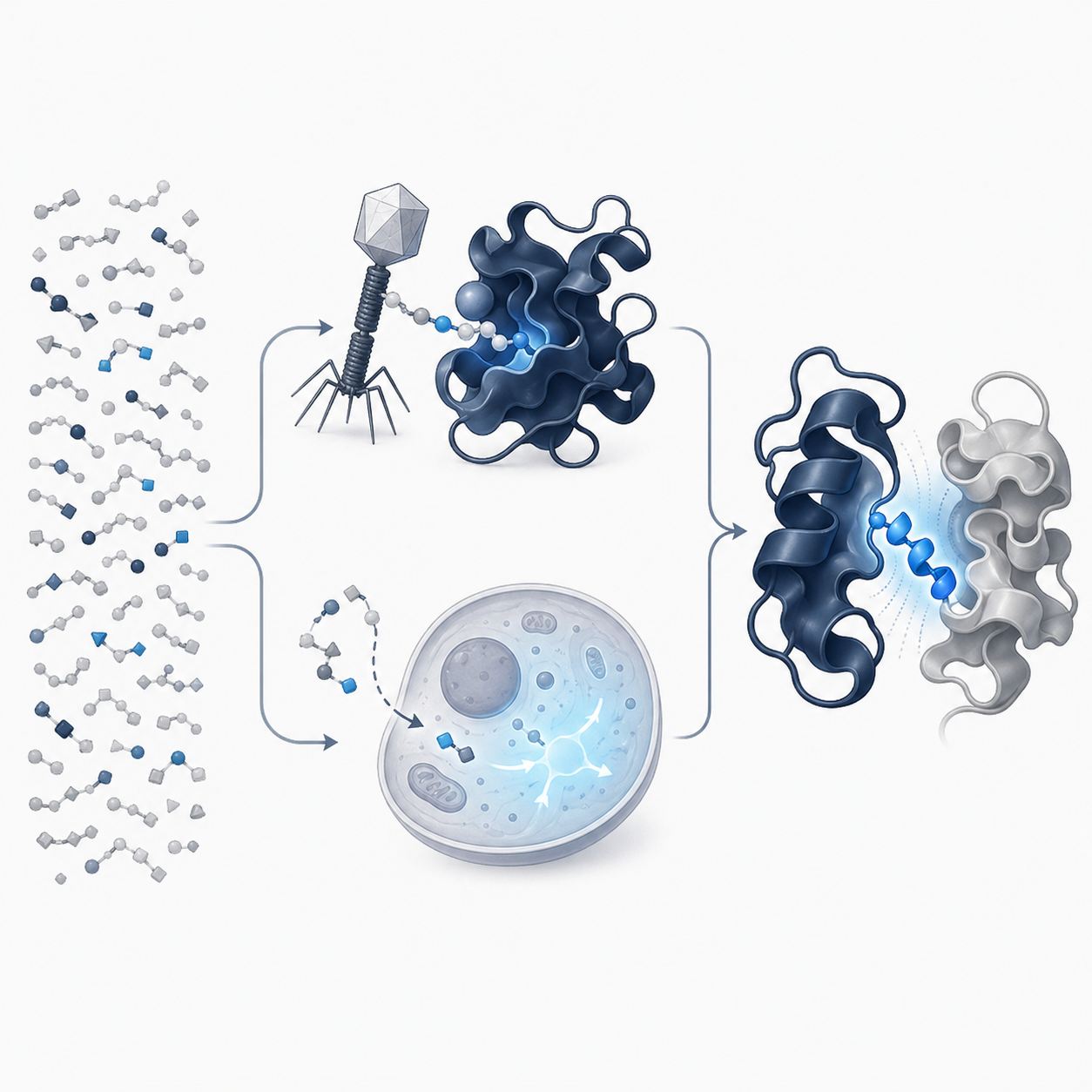
Proteome-scale peptide library screened through phage display and cell-based phenotypic assays, converging on an identified PPI modulator
Theme 02 · Discovery and modulation

Screening Motif-Mediated Protein Interactions

Many of the most consequential protein–protein interactions are mediated by short peptide motifs binding to compact interaction modules. Yet most motif-mediated PPIs remain unmapped, and far fewer have been turned into modulators that act in a disease context.

Our approach. We screen proteome-scale peptide libraries through complementary platforms — phage display for the identification of novel PPIs, and cell-based phenotypic screening for the development of disease-relevant PPI modulators. Combining the two into combinatorial workflows lets PPI discovery and modulator design unfold on the same library.
phage display proteome-scale libraries target-based screening cell-based phenotypic screening PPI modulators
An engineered protein scaffold capturing a small-molecule ligand and emitting a fluorescent signal, surrounded by chemical structures of analyte candidates
Theme 03 · Engineered recognition

High-Sensitivity Biosensors

Reliable detection of small molecules, natural products, and bioactive peptides at low concentrations is a recurring need in chemistry, biology, and clinical diagnostics. Engineered protein scaffolds offer a programmable, modular platform for selective recognition.

Our approach. We engineer protein scaffolds — including the Q-SHINE platform for glutamine sensing — to recognize analytes with high sensitivity and selectivity. By coupling binding to fluorescent or other reporter signals, we build sensors usable in living cells, lysates, and analytical workflows.
protein scaffolds fluorescent sensors natural products small molecules Q-SHINE
Interested in protein engineering, library screening, or biosensor design? We are always looking for new lab members.
Email the PI →